Multiband compression is one of those tools that separates producers who understand dynamics from those who are still learning.
A broadband compressor treats the entire frequency spectrum as one signal, which means a heavy kick or a loud vocal phrase can cause the whole mix to duck, even the parts that didn’t need controlling. Multiband compression solves this by splitting the audio into separate frequency bands and compressing each one independently. The result is more controlled, more natural-sounding dynamics without the unintended side effects of a single compressor working on everything at once.
The tricky part is that more control also means more ways to make things sound wrong if you’re not careful. Good multiband plugins help by making the process visual, logical, and forgiving enough to actually produce results you’ll want to use.
This list covers nine of the best options available right now, including Devious Machines Multiband X6, FabFilter Pro-MB, BLEASS Multiband Compressor, Slate Digital MO-TT, Waves C6, Drawmer 1973 by Softube, PSP oldTimerMB, SSL G3 MultiBusComp, and Minimal Audio Fuse Compressor.
1. Devious Machines Multiband X6
- Compatibility: macOS 10.11+, Windows 10+ (Apple Silicon native, 64-bit)
- Format: VST2, VST3, AU, AAX (64-bit)
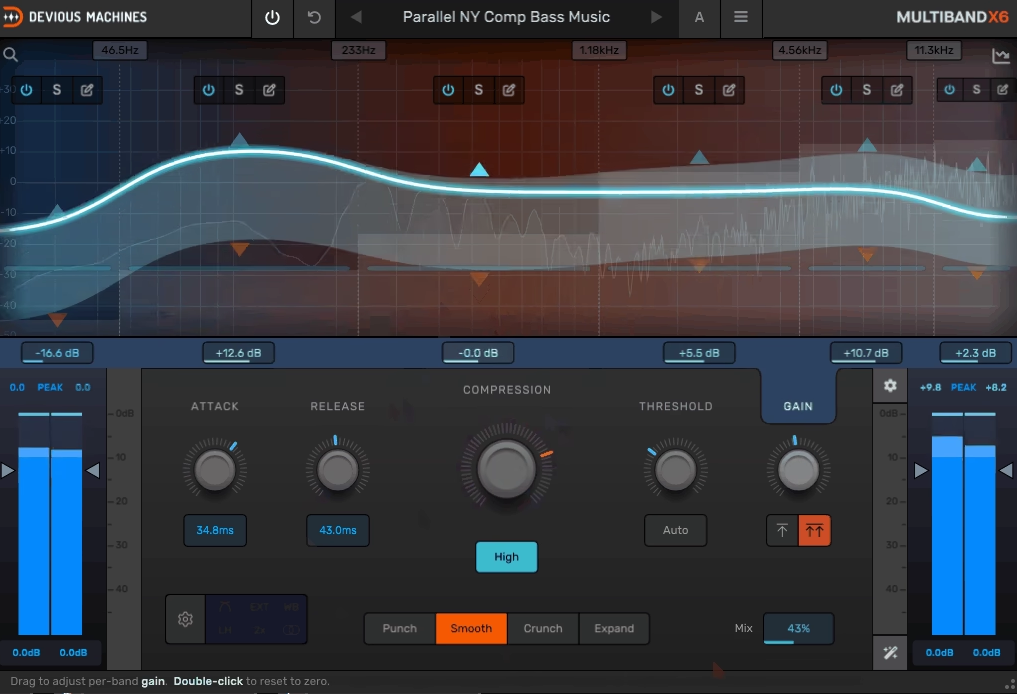
Multiband X6 does something most multiband compressors don’t bother with: it makes the whole process feel approachable without dumbing anything down.
The key is how Devious Machines structured the workflow. There are global macro controls for threshold, ratio, attack, and release that affect all six bands simultaneously, letting you dial in the general compression behavior before drilling down into individual band settings. It works like a single-band compressor at first, and you only go deeper when you need to.
Four compression models give the plugin real character: Punch (a modern clean compressor with adaptive transient response), Smooth (a refined FET-inspired model), Crunch (harmonic saturation on loud transients), and an Expander mode. Auto-Threshold analyzes the incoming signal and sets each band’s threshold intelligently, removing a lot of the guesswork involved in standard multiband setup.
Natural Balancing Technology is one of the more useful under-the-hood features, continuously working to maintain a sensible frequency balance as you adjust compression levels. This prevents the low-end from becoming muddy or the high end from disappearing when you compress heavily. With M/S processing, linear phase mode, lookahead up to 20ms, oversampling, and per-band sidechain ducking all accessible from a single panel, X6 covers serious production territory without feeling overwhelming. Attack Magazine described it as a joy to use and noted the character it adds is something you don’t often say about compressors of any kind.
2. FabFilter Pro-MB
- Compatibility: macOS, Windows (Apple Silicon native, 64-bit)
- Format: VST, VST3, AU, CLAP, AAX, AudioSuite (64-bit)
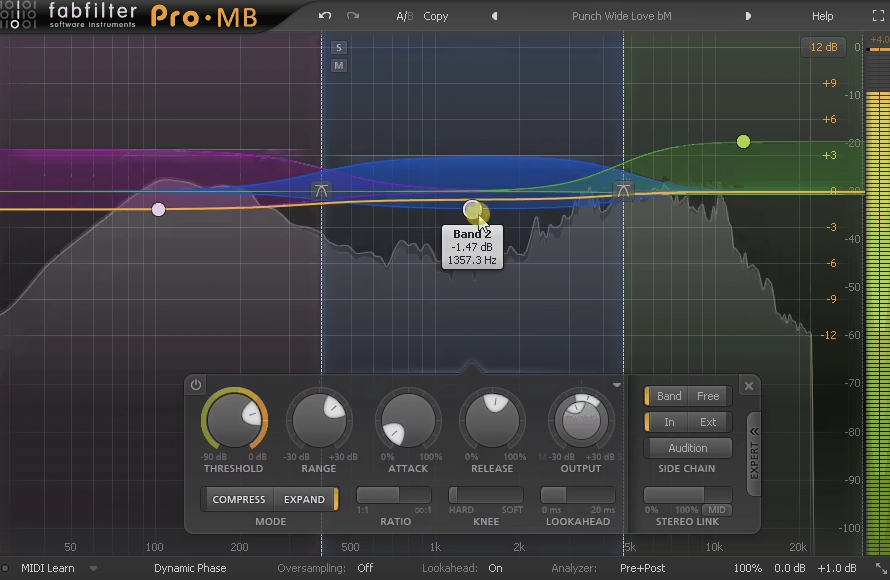
The reason Pro-MB has become a mixing standard isn’t just the quality of the processing.
It’s the fact that you can place a band anywhere you want in the frequency spectrum without needing to create adjacent bands on either side. This sounds like a small thing, but in practice it fundamentally changes how you approach multiband work. Need a tight, focused compression window around 200Hz? Click once and you’re there. No crossover chains to manage.
Each band handles downward compression, upward compression, downward expansion, and gating independently. The Range control sets a maximum gain reduction ceiling, so you can cap how hard any band compresses without having to carefully set thresholds to avoid going too far. Expert mode opens up additional detection options, including external sidechain per band, M/S processing, stereo per-band control, and over a dozen crossover slope options.
The interface is quintessentially FabFilter: animated, interactive, and visually meaningful. I’ve used Pro-MB on mix buses, drum groups, and mastering chains, and it never gets in the way of making decisions. For producers who want surgical transparency over character, this is the standard I compare everything else against.
3. BLEASS Multiband Compressor
- Compatibility: macOS, Windows (Apple Silicon native, 64-bit); iOS (AUv3)
- Format: VST3, AU, AAX (64-bit), AUv3 (iOS)
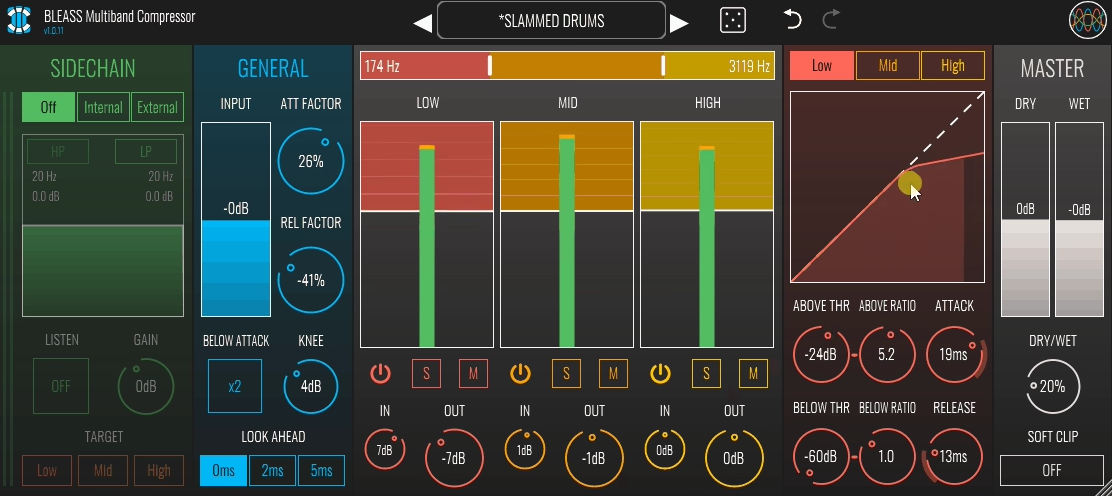
BLEASS built something compact and genuinely well-thought-out here, and the fact that it works on both desktop and iPad without losing any features is a detail worth noticing.
The three-band architecture might look limited next to Pro-MB or X6, but what makes BLEASS different is how each band handles dynamics. Every band runs a dual-stage dynamics processor: an Above stage that compresses signals exceeding a set threshold, and a Below stage that processes signals that fall under a separate lower threshold. This gives you both downward compression and expansion from a single band without needing separate controls.
Per-band sidechain routing is flexible: each band can key from the regular input signal, from a filtered version of that signal, or from an external source. This makes it genuinely useful for corrective work like taming sibilance or controlling resonances, but also works well for creative ducking effects. Soft clipping rounds out the signal chain, adding valve-like saturation rather than hard digital clipping when bands push hot.
For producers who work on iPad alongside their desktop workflow, the iOS compatibility alone makes BLEASS Multiband worth considering seriously. The CPU footprint stays light, and the visual layout is clear enough that it doesn’t require learning to use.
4. Slate Digital MO-TT
- Compatibility: macOS, Windows (Apple Silicon native, 64-bit); iLok required
- Format: VST, VST3, AU, AAX (64-bit)
The OTT preset in Ableton’s Multiband Dynamics became famous for what it does to EDM sounds: simultaneous upward and downward compression across three bands that creates a hyped, dense, forward energy that plain compression can’t produce.
Xfer Records turned it into a free plugin. Slate Digital took it further and turned it into a serious production tool.
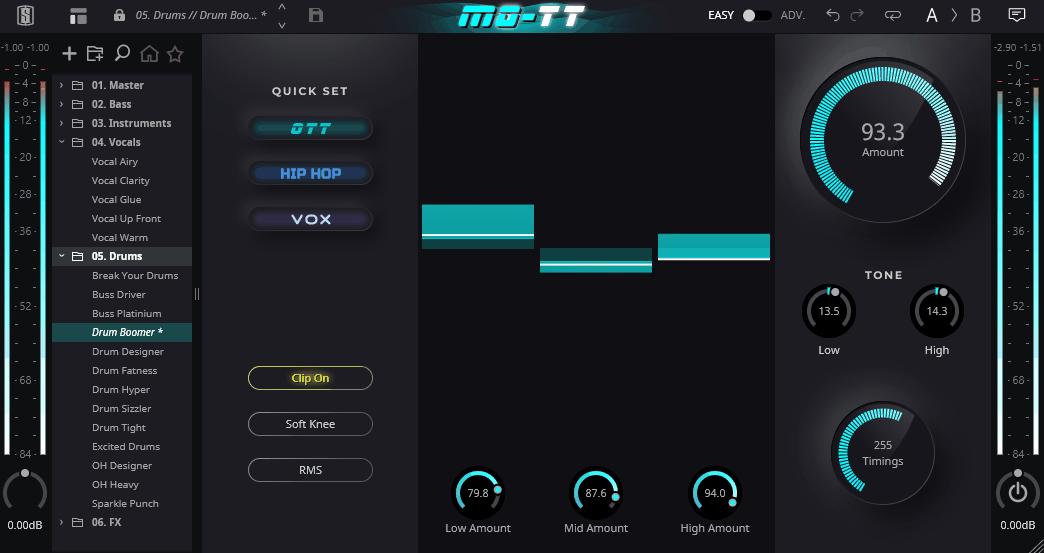
MO-TT starts with that same two-stage multiband compression concept but adds three Quick Set modes (OTT, Hip-Hop, Vox) as starting points for different contexts, and three Timing modes (Classic, Smooth, Smack) that adjust how the compression reacts to transients. Sound On Sound described it as moving well beyond OTT’s traditional user base, and that’s accurate. Tone controls on the top and bottom end give tonal shaping without needing an EQ in the chain, and global Amount and per-band Amount controls let you scale the effect from subtle to aggressive.
The Advanced view opens up access to full per-band parameters for producers who want deeper control. In Easy view, though, MO-TT is fast enough that I’ve used it successfully on a drum bus in under a minute. It’s a different tool to Pro-MB or X6, and it shines specifically when you want density and presence rather than clean dynamic control.
5. Waves C6 Multiband Compressor
- Compatibility: macOS 12+, Windows 10+ (Apple Silicon native, 64-bit)
- Format: VST, VST3, AU, AAX, AudioSuite (64-bit)
The C6 has been around long enough that it shows its age in the interface design.
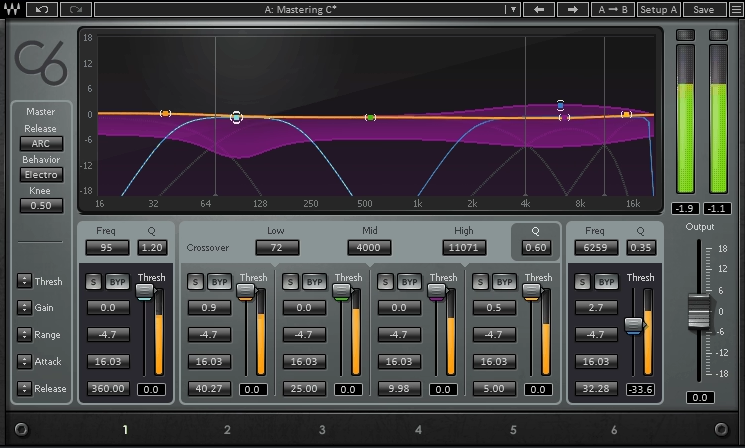
What hasn’t aged is the processing itself, which is still genuinely flexible and useful for a wide range of situations. The architecture combines four crossover bands with two floating bands: the four fixed bands function as a traditional multiband compressor with adjustable crossover points, while the two floating bands operate independently anywhere in the spectrum, essentially acting as dynamic EQ bands.
This hybrid design is what makes C6 different from a straightforward multiband compressor. The floating bands are particularly useful for de-essing within the same plugin, or for adding dynamic frequency-specific boosts that respond to the signal’s level rather than sitting static. Three release modes (VCA-style, opto-style, and ARC automatic) give meaningful variation in how bands recover after compression. Sidechain inputs are available on all six bands.
I keep C6 around specifically for situations where I need both conventional multiband control and dynamic EQ capability at the same time without stacking two plugins. It’s not the prettiest or most modern workflow, but the processing quality holds up and the floating bands are a tool I don’t find in many competitors at this price.
6. Drawmer 1973 Multi-Band Compressor by Softube
- Compatibility: macOS 12+, Windows 10+ (Apple Silicon native, 64-bit)
- Format: VST3, AU, AAX (64-bit)
Softube built the 1973 in close collaboration with Ivor Drawmer, the hardware’s original creator, and the result is an emulation that preserves the character of the original rather than just copying its specifications.
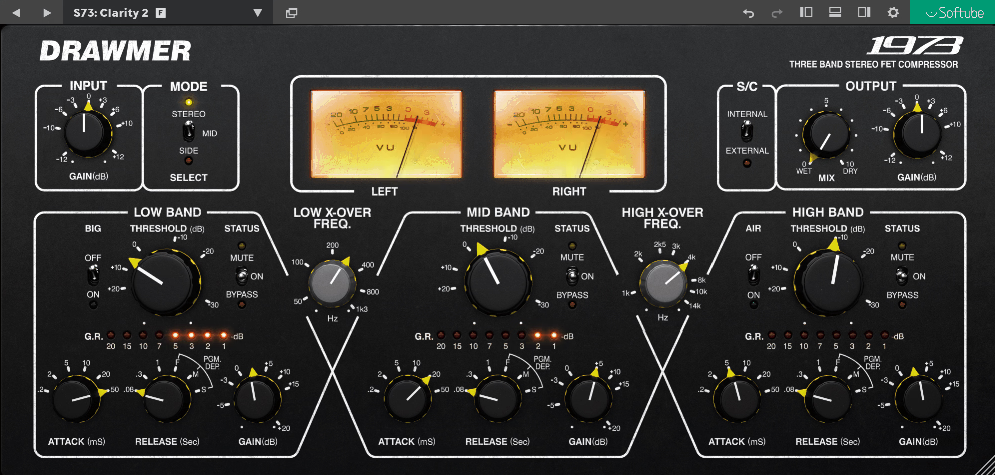
The three-band FET architecture gives the 1973 a faster, more aggressive quality than optical-based compressors. FET compression clamps down quickly and has a distinctive drive to it that many optical designs don’t. Variable crossover points let you move band boundaries to match what your audio actually needs, unlike fixed-crossover hardware designs.
What Softube added on top of the hardware model is significant: M/S processing allows independent control of the mid and side channels of a stereo signal, which the original hardware couldn’t do. External sidechain support opens up ducking and frequency-triggered compression that also wasn’t available in the hardware.
The Big switch preserves low-end character during heavy compression, and the Air switch adds a gentle high-frequency enhancement. For mastering and bus work where you want analog character alongside modern routing options, the 1973 is a reliable, honest-sounding choice. The sonic flavor is real and consistent, not a simulation that loses character when you push it.
7. PSP oldTimerMB
- Compatibility: macOS 10.9+, Windows 7+ (Apple Silicon via Rosetta, 64-bit)
- Format: VST, VST3, AU, AAX (64-bit)
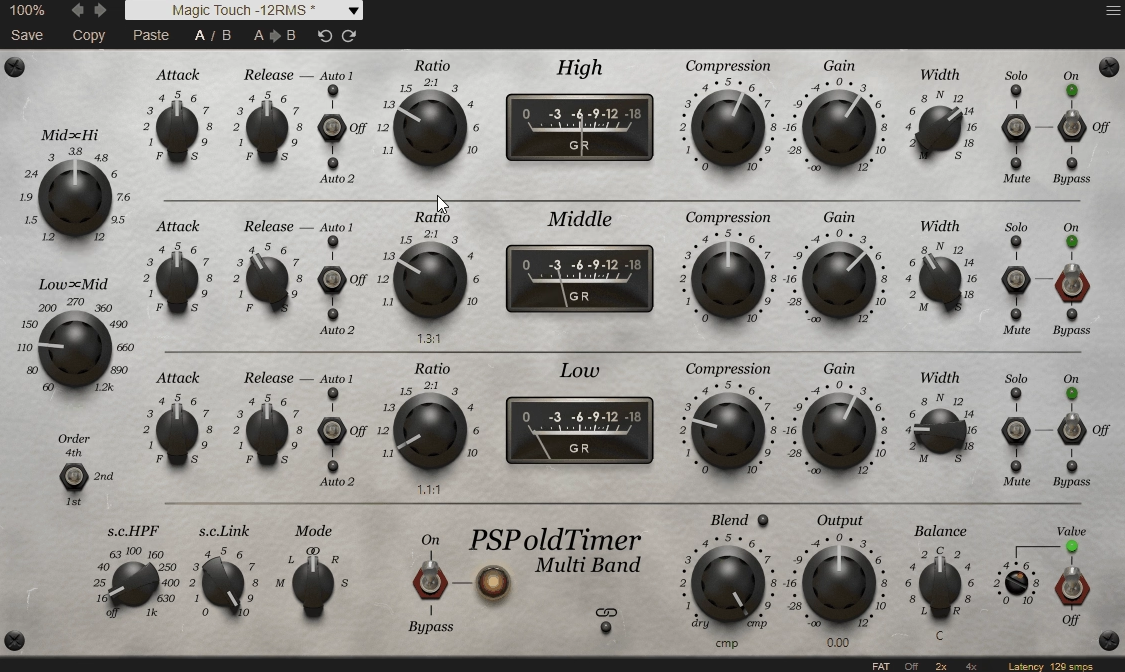
Released in 2010, PSP oldTimerMB is now genuinely old by plugin standards.
It’s still worth knowing about because the sound has a musical quality that more technically sophisticated modern plugins don’t always match. The three-band design sounds warm and characterful in a way that tracks back to the original PSP OldTimer compressor, which was itself built to capture the spirit of vintage optical and tube compression.
The Valve amp emulation stage in each band is the defining feature: it adds harmonic richness and saturation that makes the compression feel more like hardware processing than digital gain reduction. This isn’t subtly transparent mastering-grade compression. It has a sound.
Per-band Width controls let you push individual frequency bands wider or pull them narrow, which is a useful tonal shaping tool that most multiband compressors don’t include. The three-band limit means you’re working with broad decisions rather than fine surgical corrections, which actually suits the plugin’s character: it’s best used as a coloring and gluing tool on buses and full mixes rather than as a precision problem-solver. For producers who want vintage warmth baked into their dynamics, oldTimerMB still earns its place.
8. SSL G3 MultiBusComp
- Compatibility: macOS 11+, Windows 10+ (Apple Silicon native, 64-bit); iLok required
- Format: VST3, AU, AAX (64-bit)
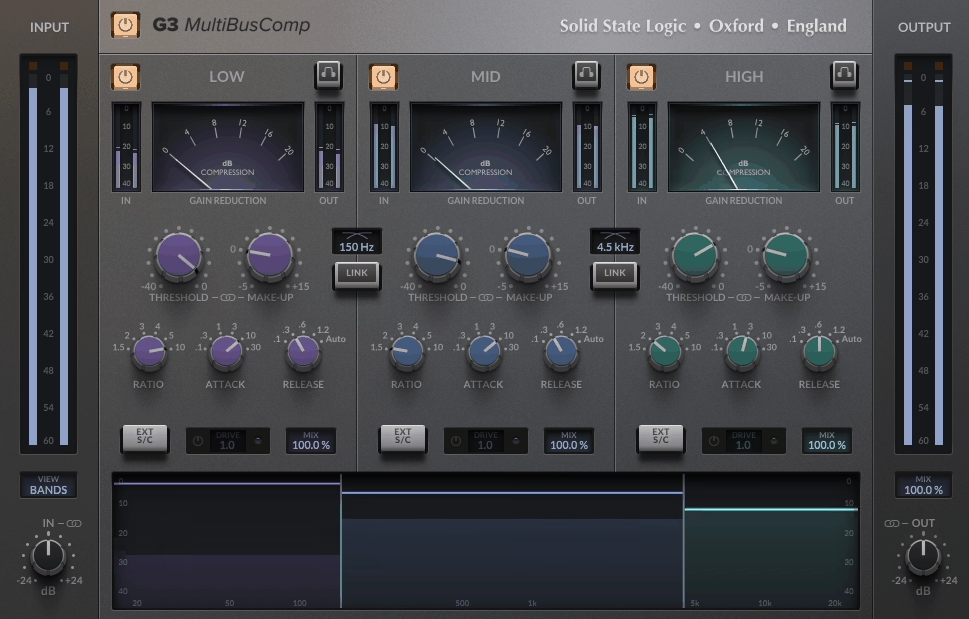
The SSL G-Series bus compressor is one of the most recognized sounds in recorded music. G3 MultiBusComp is three of them, each running independently on a separate frequency band.
That framing matters for understanding what this plugin is: it’s not a generic multiband tool that happens to sound like SSL. It’s specifically the SSL bus compressor character applied three times across the spectrum. Band-independent Drive controls based on the SSL 4000 console preamp circuit allow you to add per-band harmonic saturation and warmth. Pushing the high-band Drive gives you the SSL sparkle specifically in the high end without affecting the low and mid bands.
Sound On Sound reviewed it saying the multiband implementation is well thought-out and genuinely extends the G-Series’ usefulness. I’d agree. The most compelling specific use I’ve found is on drum buses where I want the kick and bass to stay tight in the low band while the snare and cymbals get the classic SSL push in the mids and highs.
Per-band wet/dry mix is a practical addition that lets you parallel compress each band individually, giving you fine control over how obvious or subtle the compression sounds across the spectrum. Per-band external sidechain and per-band sidechain filters round out what is an unusually thorough take on bringing the SSL bus compressor concept into multiband territory.
9. Minimal Audio Fuse Compressor
- Compatibility: macOS, Windows (Apple Silicon native, 64-bit)
- Format: VST, VST3, AU, AAX (64-bit)
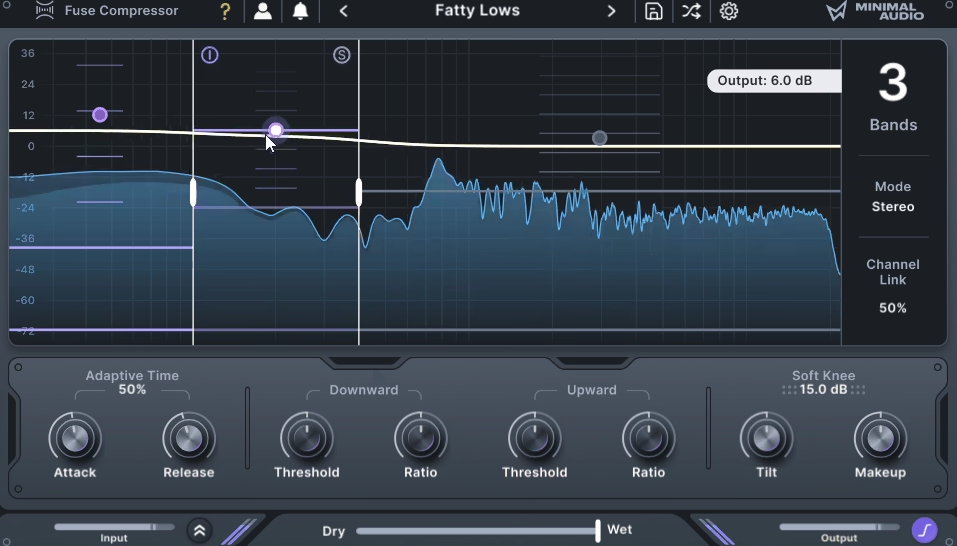
Fuse sits between a clean multiband utility and an OTT-style creative tool, and it does a decent job at both without completely nailing either.
The six-band dual compression system handles both downward compression above a threshold and upward compression below a separate threshold. In practice this means you can both control loud peaks and pull up quieter elements within each frequency band, which is what gives OTT-style processing its dense, forward character. Spectral Tilt adjusts the overall distribution of compression across the spectrum, emphasizing either low or high frequency compression with a single drag.
Adaptive Time automatically adjusts attack and release per band based on the signal content, which removes some of the tedium of setting eight different timing values manually. Macro controls let you operate it like a simple compressor by adjusting all bands together, which lowers the barrier considerably for producers who find traditional multiband setups daunting.
MusicRadar noted that for pure mixing and mastering transparency, there are more versatile options available. That’s an honest assessment. What Fuse does well is fast results on individual instruments and groups, particularly drums, synths, and anything where you want energy and density quickly. The master limiter with two saturation color options is a nice final-stage touch that makes Fuse more self-contained for bus processing.

I created ModulateBass to share the latest updates on top-quality plugins with you. Most plugins featured here offer trial versions, and when you buy through retailers like PluginBoutique, Native Instruments, or Plugin Alliance, you help keep this site running through commissions without paying anything extra.
I only showcase plugins I actually use or would genuinely choose for my own work. Price tags don’t influence my recommendations. If I love a plugin, I’ll feature it regardless of cost. For pricier options, I always suggest trying the demo first when possible. Trial versions typically include full functionality, giving you a complete experience before committing. I hope my content proves valuable for your needs. Thanks for stopping by.